How to fall safely – the first thing every judoka learns, and the basis for every throw.
受身
Ukemi – Judo breakfallsThe basic breakfalls and further variations – start, middle and end with the key points
Ukemi (受身, "receiving with the body") is the art of falling without getting hurt. Every throw ends with a fall, so Uke must master ukemi before Tori can practise throws at full speed. Good ukemi spreads the impact over a large area, protects the head and turns a fall into a controlled movement.
Chin on the chest – the head never touches the mat.
Round the back – roll onto the mat instead of landing flat.
Beat the mat with the whole arm, palm down, at about 30–45° from the body – at the same moment as the back lands.
Breathe out on impact and keep the body relaxed.
Keep the arms off the mat as props – never catch a fall with a straight arm or the elbow.
The four basic breakfalls
The Kodokan basics – learned in this order and practised at the start of every training session.
Ushiro-ukemi後受身Backward breakfall · Backwards
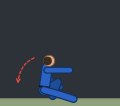
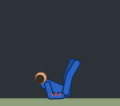
The first breakfall to learn. Uke sits down close to the heels, rolls back on a round back and beats the mat with both arms. Every throw in which Uke falls backwards ends with it. Why it works: sitting down close to the heels shortens the fall to a few centimetres, and the round back turns the remaining drop into a rocking roll, so the body meets the mat gradually instead of all at once. The arms strike at the moment the back lands and take a large part of the energy over their whole surface, while the tucked chin keeps the head off the mat.
1 · StartArms forward, chin tucked
2 · MiddleSit down close to the heels, roll back
3 · EndBoth arms beat the mat, legs up
Get it right
Look at your belt the whole time – the chin stays on the chest.
Sit down close to your heels, then roll back over a round back.
Beat the mat with both arms at 30–45° from the body, palms down.
Let the legs swing up and come back – the back of the head stays in the air.
The most common landing after throws. Uke slides one leg out to the side along the mat, sits down low over the heel of the other leg and rolls onto the side of the sliding leg. The arm on that side beats the mat. Practised to the left and right. Why it works: sitting down next to the supporting heel brings the hips almost to the mat before the actual fall, so there is hardly any height left to fall from. The body then rolls onto its side – hip, flank and shoulder – which spreads the impact over a long contact line, and the arm beating the mat takes the last of the energy.
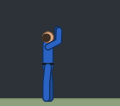
1 · StartArm swings up, one leg slides out to the side
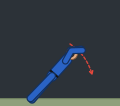
2 · MiddleSit down low over the supporting heel
3 · EndRoll onto the side, legs up – the arm beats the mat
Get it right
Slide the leg out to the side along the mat and sit down low and close to the supporting heel.
Roll onto the side of the sliding leg – hip and shoulder touch the mat, the head stays up.
Beat the mat with the arm on the landing side, about 30–45° from the body.
Let the legs swing up and keep them apart so the ankles don't knock together.
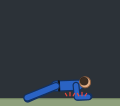
Falling straight forward onto the forearms. The body stays straight and tense, and the forearms and hands form a triangle in front of the face that takes the impact. Protects against stumbles and falls on the face. Why it works: the forearms and palms form a large, flat contact area that lands all at once, and the elbows bend slightly to brake the fall like a spring. Because the body stays straight and tense, the energy is passed evenly into the forearms and the toes instead of into the knees, chest or face.
1 · StartForearms up in front of the face
2 · MiddleFall forward with a straight body
3 · EndLand on forearms and toes, head turned
Get it right
Bring the forearms up in front of the face, hands forming a triangle.
Keep the body straight and tense from head to heels.
Land on the whole forearm and palms at the same time – the elbows bend to absorb the fall.
Turn the head to the side; only the forearms and toes touch the mat.
Zenpo-kaiten-ukemi前方回転受身Forward rolling breakfall · Forward roll
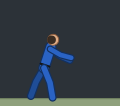
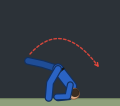
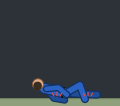
A diagonal roll from the leading hand over the shoulder and across the back to the opposite hip. It ends in yoko-ukemi or with standing up. Needed for throws that turn Uke over forwards. Why it works: instead of stopping the forward motion, the roll converts it into rotation. The curved arm and the diagonal path over the shoulder and across the back give the body a round surface to roll over, so the energy is used up gradually along the whole roll. The final slap of arm and leg takes the rest.
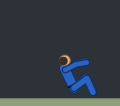
1 · StartStep forward, arm forms a circle
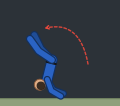
2 · MiddleRoll diagonally over the shoulder
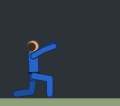
3 · EndCome up into a stable stance
Get it right
Step forward with the same leg as the rolling arm and curve the arm into a circle.
Roll from the little-finger side of the hand along the arm and over the shoulder.
Turn the head away from the rolling arm – the head never touches the mat.
Roll diagonally across the back to the opposite hip and come up facing forward.
Uke needs it for
Uki-otoshiSumi-otoshiKata-guruma
Further variations
Rolls and falls for advanced practice, and ukemi when a partner throws you.
Ushiro-kaiten-ukemi後方回転受身Backward roll · Backward roll
The continuation of ushiro-ukemi: instead of stopping on the back, Uke rolls over one shoulder and comes back to the knees or feet. Useful to get out of a backward fall and stand up quickly. Why it works: the backward momentum is not stopped on the back but carried on into a roll. Going over one shoulder (not the neck) keeps the spine safe, and the small, tucked body rolls through quickly, so Uke ends up on the knees with the energy used up in the rotation.
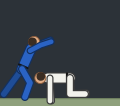
1 · StartCrouch with arms forward
2 · MiddleRoll back over one shoulder
3 · EndCome up on one knee, facing forward
Get it right
Start low and round, chin on the chest.
Turn the head to one side and roll over the opposite shoulder, not over the neck.
Pull the knees in close so the roll stays small and fast.
Land on the knee and foot and come up facing your partner again.
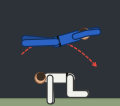
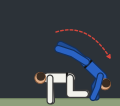
Zenpo-tobi-ukemi前方飛び受身Flying forward roll · Forward, airborne
A diving zenpo-kaiten-ukemi over a partner or an obstacle. It trains the confidence to fall from a height, as in high throws like uchi-mata or harai-goshi. Only for judoka who roll cleanly on the ground. Why it works: the higher and longer the flight, the more energy there is – the rolling arm touches down far ahead and turns the downward speed into forward rotation. The longer the roll, the more gently the energy is spread out. That's why a clean ground roll is the precondition.
1 · StartRun up and take off
2 · MiddleDive over the obstacle, arm leads
3 · EndLanding: the right arm touches down first, head tucked
Get it right
Learn it step by step: first a low obstacle, then higher and longer.
Lead with the rolling arm in a curve – reach long, not down.
Touch down far beyond the obstacle and roll diagonally over the shoulder.
Keep the body tucked in the roll and come up in one movement.
Uke needs it for
Uchi-mataHane-goshiHarai-goshi
Nage-komi ukemi投込受身Ukemi when thrown · From a throw
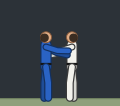
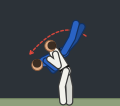
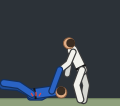
The real test of ukemi: Tori throws, Uke lands. The pictures show O-goshi from ai-yotsu (both right-handed). Tori keeps hold of Uke's sleeve until Uke has landed and guides the fall; Uke beats the mat with the free arm. Practise each throw slowly at first and choose the ukemi it calls for – e.g. ushiro-ukemi for O-soto-gari, yoko-ukemi for O-goshi or Ippon Seoi Nage. Why it works: a throw adds speed and rotation that Uke cannot control alone. Tori's pull on the sleeve slows the fall and keeps Uke's upper body off the mat, and Uke's slap at the moment of landing takes the remaining energy – both together make hard throws safe to practise.
1 · StartAi-yotsu kumikata – both judoka grip right-handed
2 · MiddleO-goshi: Uke goes over Tori's hip, chin tucked
3 · EndUke beats the mat, Tori holds Uke's arm
Get it right
Hold on to Tori's sleeve with the gripping hand; beat the mat with the free arm.
Tuck the chin as soon as the throw starts – before you leave the ground.
Go with the throw instead of blocking it with a straight arm or a stiff leg.
Tori keeps the sleeve until Uke has landed, so Uke can't land on the head or shoulder.
Sutemi-waza ukemi捨身技の受身Ukemi for sacrifice throws · Over Tori
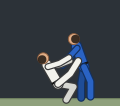
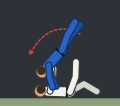
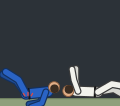
In sacrifice throws Tori falls first and Uke flies over Tori's body, often head first. Uke needs a clean forward roll: tuck, turn over the shoulder and land in yoko- or ushiro-ukemi, well clear of Tori. Why it works: Uke is thrown head first over Tori, so the fall must turn into a roll. Tucking the chin and turning over the shoulder lets the rotation carry Uke through to the back, and the slap of arm and leg on landing takes the last of the energy, well clear of Tori.
1 · StartTori drops, foot in Uke's belly
2 · MiddleUke flies over, chin tucked
3 · EndUke lands on the back beyond Tori
Get it right
Tuck the chin and round the back as soon as Tori drops.
Turn over the shoulder – never dive straight onto the head.
Beat the mat on landing and keep the legs away from Tori.
Practise first from a kneeling position, then from standing.
Uke needs it for
Tomoe-nageSumi-gaeshiUra-nageYoko-gurumaUki-waza
How ukemi is taught – from low to high
Lying on the back – rock and beat the mat.
Sitting with straight legs – roll back and beat the mat.
Squatting (sonkyo) – sit down close to the heels and roll.
Standing – from a still, upright position.
Moving – walking forwards, backwards and sideways, then falling.
Over a partner or obstacle – and finally when thrown (nage-komi).
Safety for teaching
Start every session with a few minutes of ukemi – even with advanced judoka.
Move on to the next level only when the current one is clean on both sides.
Children and beginners learn throws only once ushiro- and yoko-ukemi are automatic.
Use soft mats and enough space; for flying rolls add a crash mat.
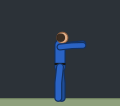 1 · StartArms forward, chin tucked
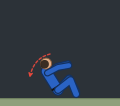 2 · MiddleSit down close to the heels, roll back
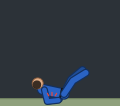 3 · EndBoth arms beat the mat, legs up
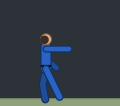 1 · Start
 2 · Middle
 3 · End
 1 · Start
 2 · Middle
 3 · End
 1 · Start
 2 · Middle
 3 · End
 1 · Start
 2 · Middle
 3 · End
 1 · Start
 2 · Middle
 3 · End
 1 · Start
 2 · Middle
 3 · End
 1 · Start
 2 · Middle
 3 · End